
Introduction
In precision manufacturing, scrap is more than a material loss. It represents wasted machine time, lost labor, delayed delivery, and reduced confidence in the process. For shops working with tight tolerances and high-value materials, even a small scrap rate can create serious cost pressure over time.
When manufacturers look for the causes of scrap, they often examine tooling, programming, machine condition, or operator error. These factors are important, but one common source of problems is often less visible: unreliable workholding. If the part is not clamped securely and consistently, the machining process becomes harder to control from the very beginning.
That is why reliable workholding plays such an important role in reducing scrap. A stable and repeatable setup helps create better conditions for accuracy, consistency, and overall process control.
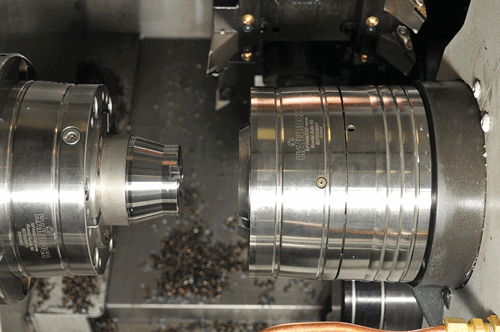
Scrap Often Starts with Setup Instability
Not all scrap is caused by dramatic failures. In many cases, the problem begins with small setup variation that gradually leads to dimensional errors, poor surface finish, or misplaced features. A part may shift slightly during clamping, sit differently from one run to the next, or respond unevenly to cutting forces because the support is inconsistent.
These issues are especially dangerous because they are not always obvious at first. The first few parts may appear acceptable, but variation grows as conditions change or the process becomes less predictable. By the time the problem is fully identified, time and material have already been lost.
Reliable workholding reduces this risk by creating a more stable starting point. When the part is held the same way every time, the process becomes easier to monitor and much less likely to drift into preventable scrap.
Precision Manufacturing Leaves Less Room for Error
In general machining, minor variation may sometimes be corrected or accepted. In precision manufacturing, the margin for error is much smaller. Parts often have tighter tolerances, more critical surfaces, and stricter inspection requirements. Materials may also be more expensive, which increases the cost of every rejected part.
Under these conditions, unreliable workholding becomes a serious weakness. Even a small inconsistency in part location or clamping pressure can affect the final result. Flatness, hole position, profile accuracy, and surface quality may all suffer if the part is not supported properly.
This is why reliable workholding is not just a convenience for precision shops. It is part of the quality strategy. The setup must support the same level of control that the machine, tooling, and programming are expected to deliver.
Consistent Clamping Supports Dimensional Accuracy
One of the most important ways workholding helps reduce scrap is by supporting dimensional consistency. A part that is clamped securely and repeatably gives the program a predictable reference. Offsets remain more dependable, toolpaths perform as expected, and the finished dimensions are easier to maintain across multiple parts.
When clamping is inconsistent, dimensional problems become more likely. A small difference in how the part sits in the vise cnc can influence feature location. Uneven pressure may introduce slight distortion, especially in thinner or more delicate parts. The result is a process that appears correct in theory but produces variable outcomes in practice.
Reliable workholding helps eliminate these issues by making the setup more repeatable. This gives the entire machining process a stronger mechanical foundation and reduces the chance that otherwise good parts will be lost to avoidable dimensional variation.
Better Stability Improves Surface Finish and Tool Behavior
Scrap is not only caused by incorrect dimensions. Surface quality can also lead to part rejection, especially when cosmetic or functional finish standards are strict. Workholding affects this more than many people realize.
If the setup lacks stability, vibration becomes more likely during machining. This can produce chatter marks, uneven finish, or inconsistent tool engagement. In some cases, operators respond by reducing cutting parameters, which protects the part but lowers efficiency. In other cases, the part still ends up rejected because the finish does not meet the requirement.
Reliable workholding helps maintain a more stable cut. Strong support reduces unnecessary vibration and allows the tool to perform under more consistent conditions. This not only improves finish quality but also helps protect tool life and reduce the number of unexpected process interruptions that can lead to scrap.
Operators Need Setups They Can Trust
Reliable workholding also reduces scrap by improving operator confidence. A setup that behaves predictably is easier to load, easier to verify, and easier to repeat under daily production pressure. This lowers the chance of small mistakes that can create larger problems later in the process.
When operators are unsure whether the part is seated correctly or clamped consistently, they may spend extra time checking, adjusting, or compensating. Even with care, uncertainty increases the possibility of inconsistency. Over time, that uncertainty can lead to more rejected parts and slower production.
A dependable workholding method helps remove that doubt. It creates a clearer process that supports both experienced machinists and newer operators. In this way, reliable workholding strengthens not only the setup self centering vise but also the human side of process control.
Scrap Reduction Supports Profitability
Reducing scrap is not only about quality. It also has a direct effect on profitability. Every scrapped part represents wasted raw material, machine time, labor, tooling use, and inspection effort. In precision manufacturing, where parts may require multiple operations or expensive materials, the financial impact can be significant.
Reliable workholding helps protect this investment by improving the chance that parts will be produced correctly the first time. It reduces the amount of variation the process must absorb and supports more stable daily production. Over time, this leads to better yield, stronger delivery performance, and less hidden cost throughout the workflow.
For many shops, improving workholding reliability is one of the most practical ways to reduce quality-related losses without major disruption.
Conclusion
Reliable workholding helps reduce scrap because it creates a more stable, repeatable, and controllable machining process. It supports dimensional accuracy, improves surface quality, reduces setup variation, and gives operators a stronger foundation for daily production.
In precision manufacturing, where the cost of error is high and tolerance for inconsistency is low, dependable workholding is a critical part of success. It is not only about holding the part in place. It is about protecting quality, reducing waste, and helping the entire machining process perform with greater confidence.