
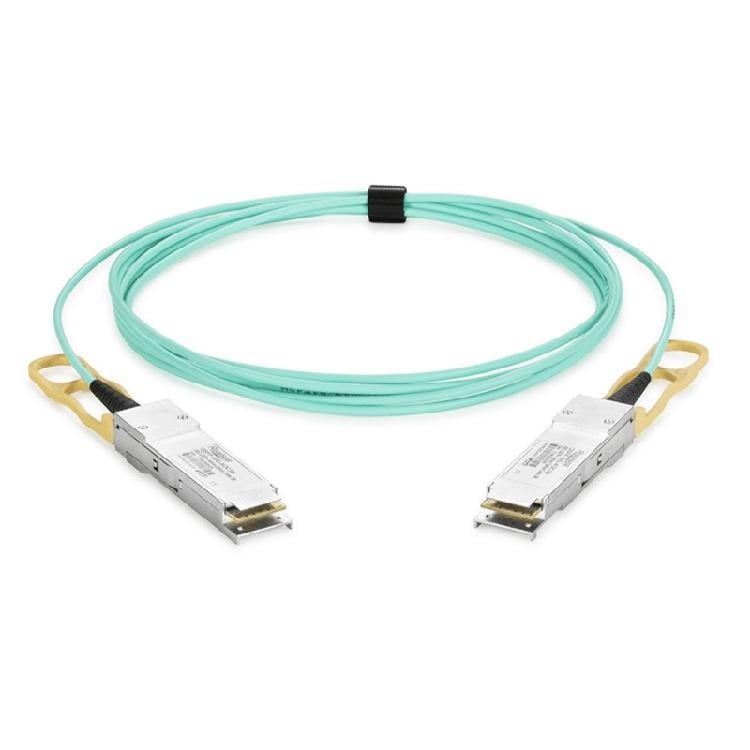
In today’s high-speed data center and enterprise networking environments, choosing the right cabling solution is crucial for achieving optimal performance and efficiency. Two of the most commonly used options are QSFP28 active optical cable and traditional copper cables. Both have their advantages and limitations, and understanding these differences can help IT professionals make informed decisions for their infrastructure. Fiber-mart offers a wide range of high-quality QSFP28 active optical cables, ensuring reliable and efficient network connectivity.
Understanding QSFP28 Active Optical Cables
QSFP28 active optical cables (AOCs) are designed to provide high-speed data transmission over longer distances than traditional copper cables. Unlike passive copper solutions, these cables incorporate optical transceivers at each end, which convert electrical signals to optical signals and vice versa. This design significantly reduces signal loss and interference, making AOCs ideal for data centers, enterprise networks, and high-performance computing environments.
One of the primary advantages of QSFP28 active optical cables is their ability to support data rates of up to 100Gbps over distances that can exceed 100 meters. This is particularly important in modern network architectures where high-speed interconnects between servers, switches, and storage devices are critical. Additionally, AOCs are lightweight and more flexible than copper cables, reducing cable management challenges in dense rack environments.
Limitations of Traditional Copper Cables
Traditional copper cables, such as twinax or Cat6a, have been the standard for short-range connections in networking. Copper cables transmit data electrically, which introduces several limitations compared to optical solutions. Signal degradation, electromagnetic interference (EMI), and distance limitations are common challenges with copper cables. Typically, copper cables are suitable for connections up to 7 meters for high-speed 100Gbps links. Beyond this range, performance drops significantly, requiring signal repeaters or other mitigation techniques.
Copper cables are also bulkier and heavier, making cable management in large-scale data centers more challenging. Their susceptibility to EMI can be a concern in environments with high-density electronic equipment. Despite these limitations, copper cables remain cost-effective for short-range applications and are widely available, making them a practical choice for certain networking scenarios.
Performance Comparison
When comparing QSFP28 active optical cables to traditional copper cables, performance is a critical factor. AOCs offer significantly higher bandwidth and longer reach. With a QSFP28 active optical cable, data centers can achieve 100Gbps connectivity across racks and even between different server rooms without compromising signal integrity. This level of performance is difficult to achieve with copper cables due to physical and electrical limitations.
Another aspect of performance is latency. Optical cables, including QSFP28 AOCs, generally offer lower latency compared to copper, which is essential for applications like high-frequency trading, cloud computing, and real-time data processing. Reduced latency can improve overall network efficiency, allowing for faster access to critical data and smoother operation of high-demand applications.
Cost Considerations
Cost is often a significant factor when selecting between QSFP28 active optical cables and copper alternatives. Copper cables are typically less expensive upfront, making them an attractive option for short-range connections and smaller networks. However, the cost savings diminish when considering installation complexity, the need for repeaters for longer distances, and potential downtime due to signal degradation.
QSFP28 active optical cables from Fiber-mart may have a higher initial investment, but they provide long-term benefits, including reduced maintenance costs, lower power consumption, and simplified network management. The ability to achieve longer distances without signal boosters or additional hardware can offset the higher purchase price, especially in large-scale or rapidly growing data centers.
Installation and Cable Management
Cable management is a crucial consideration in modern network design. Traditional copper cables are heavier and stiffer, making routing and organizing them in racks more cumbersome. Dense deployments can become messy, increasing the risk of accidental disconnections or damage during maintenance.
In contrast, QSFP28 active optical cables are lighter, thinner, and more flexible, simplifying cable routing in high-density racks. Their design allows for cleaner installations, reducing airflow obstruction and improving cooling efficiency within the data center. Fiber-mart provides QSFP28 AOCs with robust connectors and flexible sheathing, making installation straightforward even in complex environments.
Reliability and Signal Integrity
Reliability is another key area where QSFP28 active optical cables excel. Optical transmission is immune to electromagnetic interference, ensuring consistent performance even in environments with high electrical noise. Copper cables, on the other hand, can be affected by EMI, leading to potential data errors, retransmissions, and network instability.
The active components in QSFP28 AOCs also include built-in monitoring and diagnostics, allowing network administrators to track performance, detect faults, and address issues proactively. This level of reliability and visibility is critical for mission-critical applications where downtime or data loss is not an option.
Environmental Considerations
Energy efficiency and heat generation are becoming increasingly important in modern data centers. Copper cables, especially at high speeds, can consume more power and generate additional heat due to electrical resistance. QSFP28 active optical cables, by converting electrical signals to optical signals, reduce power consumption and heat output. This contributes to lower cooling requirements and overall operational cost savings, making AOCs a more sustainable option for large-scale deployments.
Choosing the Right Solution
Selecting between QSFP28 active optical cables and traditional copper cables ultimately depends on the specific needs of the network. For short-range connections in small or budget-conscious deployments, copper cables remain a viable option. However, for high-speed, long-distance connections, low-latency applications, and environments where cable management and reliability are critical, QSFP28 active optical cables provide clear advantages.
Fiber-mart offers a wide range of QSFP28 active optical cables designed to meet diverse networking requirements. From 1-meter to 100-meter lengths, these cables ensure high-performance connectivity with minimal installation challenges. By investing in high-quality AOCs, network administrators can future-proof their infrastructure while achieving superior performance and reliability.
Conclusion
In summary, QSFP28 active optical cables and traditional copper cables serve distinct roles in modern networking. While copper cables are cost-effective and suitable for short-range connections, they face limitations in distance, interference, and cable management. QSFP28 active optical cables, particularly those offered by Fiber-mart, provide high-speed, long-distance, and low-latency connectivity, making them ideal for data centers, enterprise networks, and high-performance computing environments.
For organizations looking to optimize network performance, reduce maintenance challenges, and prepare for future bandwidth demands, QSFP28 active optical cables represent a superior choice. By understanding the strengths and limitations of each cable type, IT professionals can make informed decisions that align with their operational goals and technical requirements.